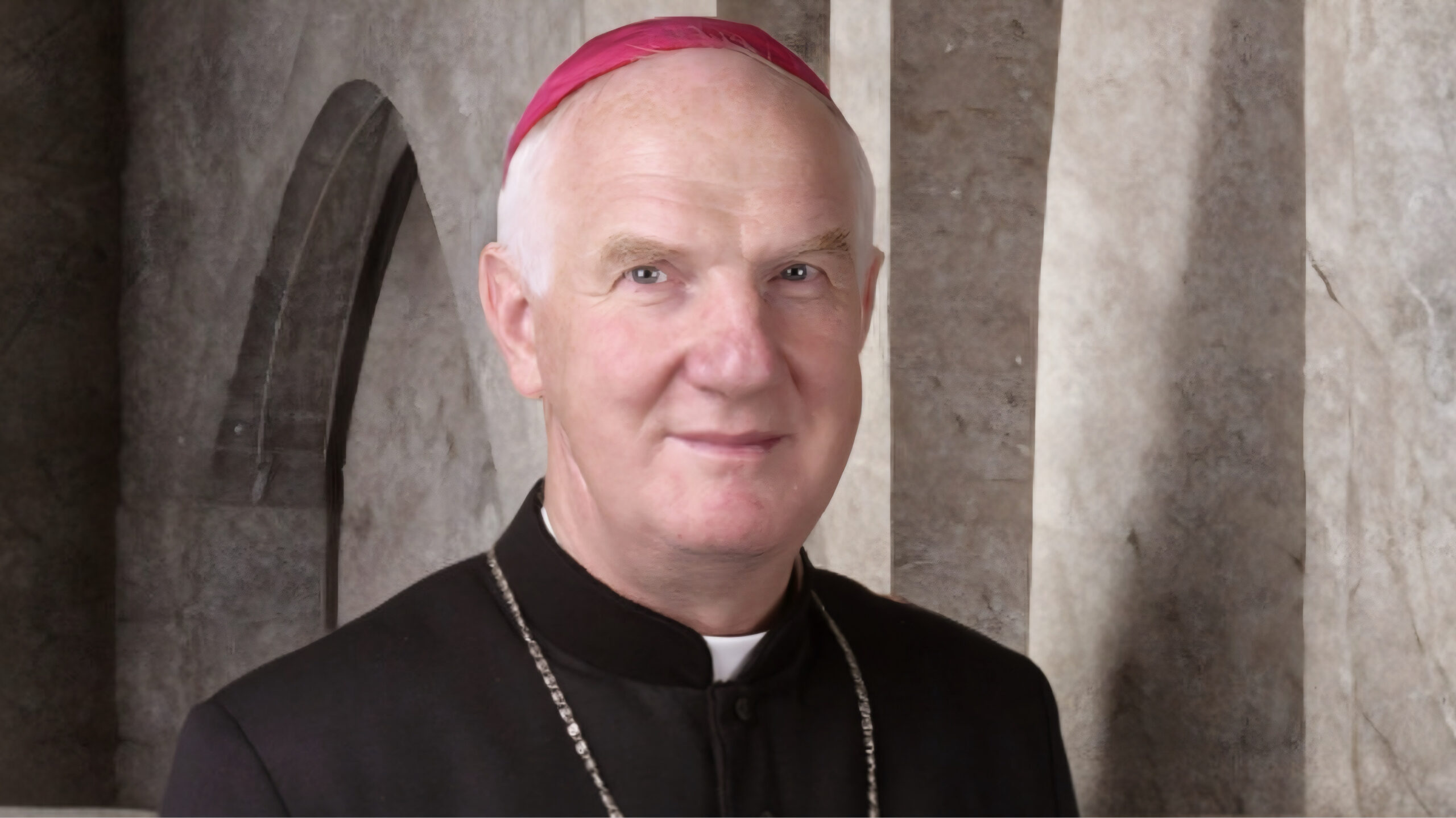
ŚWIDNICA: Bishop Ignacy Dec: Classical philosophy was born in ancient Greece in the fourth century before Christ. Its main founders were Socrates, Plato, and especially Aristotle. These thinkers opened the doors to European science by asking the fundamental question: what is reality, what is its foundation, its essence – the “arche”?
Table of Contents
Classical Philosophy – The Path to Natural Knowledge of God
In antiquity, the aim was not only to describe reality but also to explain it by seeking the reasons why it is the way it is and why it exists at all, since it does not have to. A key question was also what in being is subject to change and what remains unchanged. In his quest to answer these questions, Aristotle developed a theory of being, identifying both internal and external factors that explain the nature of reality and resolve the issue of change and permanence. Thus, the first metaphysics—the theory of being—took shape, providing answers to why something is the way it is, what aspects are mutable, and what aspects are immutable.
Christian thinkers, especially St. Thomas Aquinas, who largely adopted Aristotle’s metaphysical legacy, added the question: why does something exist at all, since it does not have to? This question opened the path to natural knowledge of the existence of God.
This kind of intellectual inquiry—aimed at uncovering the ultimate causes of reality—was based on broadly understood experience and sound, logical reasoning. It was assumed that man, endowed with sensory and intellectual cognitive faculties, is called to understand reality. Reality was always the teacher, and man was its student. Knowledge was about intellectually “aligning” oneself with reality. This conformity between intellectual understanding and the ontological state of things was called truth. Such a cognitive stance grounded realism and objectivity in human knowledge. Direct contact with reality and discerning its truth—i.e., alignment with what is presented in the field of human cognition—was always fundamental.
The 19th Century Abandonment of the Question “Why?”
This cognitive approach came under attack in modern times. In the 19th century, influenced by the ideas of the French Revolution, the paradigm of science changed. In European positivism, the foundational scientific question „why” was abandoned in favor of the question „what is the world like; how do things relate?” Science, including the new positivist concept of philosophy, ceased to explain the world and instead settled for merely describing it. The path of inner experience was closed off, and common sense was disregarded. Science began to concern itself only with what was subject to sensory experience. It concluded that only what is empirically verifiable exists. The supernatural realm was rejected. Others ceased to be interested in reality altogether and instead focused on examining thoughts, concepts, and ideas. These two approaches established materialist and idealist positions in European culture.
Nineteenth-century philosophy witnessed the emergence of idealist (Hegelian) and materialist (Marxist) philosophies. By severing its connection with reality, philosophy drifted toward ideology—a trend that dominates the Western world today. It is propagated by contemporary postmodernism and various forms of liberalism. As a result, irrational beliefs and assertions have emerged—such as the claim that there is no objective truth binding for all, no objective good or beauty, and no enduring values.
Bishop Ignacy Dec: We Are Witnessing the Devaluation of Reason’s Cognitive Capabilities
Various cultural and moral deviations are being promoted. What was once regarded as pathology and deviation is now presented as the norm—and even as something to be legalized and codified into law. We are witnessing a degradation of reason’s cognitive capacities and a diminishing of the value of common sense. While the Enlightenment elevated human reason—often opposing it to faith and religion—today we are experiencing an unprecedented degradation of reason, along with contempt for faith and religion. We are now called to defend not only faith but also reason.
Postmodern and liberal philosophy today presents a false image of the human person, posing a serious threat to humanity and its future. Inner human experiences—such as the presence of conscience, the sense of duty, freedom, morality, and religiosity—are being excluded from the cognitive field.
It is worth recalling that in his encyclical Sollicitudo Rei Socialis, John Paul II wrote that the root of the crisis in modern civilization lies in an anthropological error—that is, a false, usually limited and fragmented, image of the human person. Man has been confused either with an animal (materialism, Marxism, Freudianism, collectivism) or with God (individualism, postmodernism, liberalism). The consequences of this error are visible in acts of aggression against the human person. Those who destroyed God became the destroyers of man. This was clearly evident in the totalitarian regimes of the twentieth century and is now camouflaged in today’s democracies that reject values.
Man and His Place in the Hierarchy of Beings
We must return to an objective, realistic image of the human person—one based on sound experience and common sense. This image is beautifully presented in classical philosophy. It shows that man appears to himself—both externally and internally—as a unique being: a bodily-spiritual being, capable of intellectual knowledge, selfless love, endowed with freedom, and transcending the norms of determined and unconscious nature. Man, allowing his existential experience to „speak,” perceives himself as a child of the earth clothed in the matter of nature, yet oriented toward the suprasensory, the infinite, through his immaterial spirit.
This image of man echoes the one shaped by the great masters of the past, who placed man in the middle of the hierarchy of beings. Above him are God and angels (pure spirits), and below him is the world of living beings (plants and animals) and inanimate matter. Man is the link connecting the invisible world of spirit with the visible world of matter. In him, the spiritual and material worlds meet and intersect. He is both the representative of creation before God and God’s representative before creation.
“There Will Be No Unity in Europe Until It Becomes a Community of Spirit”
The path to discovering such an image of man is through experience—thus through realistic philosophy, based on broadly understood experience. Cardinal Karol Wojtyła, later Saint John Paul II, followed this path. His vision of the human being, presented in his key anthropological works Love and Responsibility and The Acting Person, was developed on the basis of integrally understood anthropological experience. This vision—revealed in our original, existential experience, and connected to the categories of truth and falsehood, good and evil—holds special significance for today’s culture. It stands in opposition to the postmodern and liberal image of man, which so blatantly denies objective cognitive and moral values, as well as the value of objective truth and good.
The vision of man present in classical philosophy should form the foundation of a new order in Europe. It should underlie efforts to unify Europe. This vision is consistent with the image of man painted on earth with the brush of the Son of God. Undoubtedly, this is the vision of man that John Paul II had in mind when, on June 3, 1997, during his sixth pilgrimage to Poland, he said in Gniezno: “There will be no unity in Europe until it becomes a community of spirit. The deepest foundation of this unity was brought to Europe by Christianity and has been strengthened by it for centuries—with its Gospel, its understanding of man, and its contribution to the development of the history of peoples and nations.”
Distorting Reality
Today, there is an attempt to eliminate this vision of man from modern culture. This is being done by ideological centers hostile to God and man—centers that control the media and financial institutions. They engage in the daily distortion of reality. They often seek to ground their power and wealth on such deception.
There is an urgent need for us to use sound reasoning—supported by the teachings of the Gospel—to remain faithful to the truth, that is, to remain faithful to reality, and to our conscience, which is a crucial part of our human reality. Classical philosophy—rooted in experience and common sense, in other words, in sound reason, which St. Thomas Aquinas called “God’s favorite gift”—provides a valuable key to exposing distortions of reality and fighting the myths currently amplified in the media.
We must remember that ideologies rise and fall, that trends pass, but truth, goodness, beauty, and other values are immortal—they endure and continue to bring happiness to people.
Bearing in mind that many of the crimes of our time have been committed by people trapped in false ideologies, we must heed the warning of one of today’s Christian thinkers who said: “Unfortunately, the memory of individuals and of entire nations is very fragile. They quickly forget the old, wise warning that those who forget past crimes and misfortunes are doomed to relive them.” May we not have to live through the bitter truth of those words.
Bishop Ignacy Dec
Central Europe Reports, Opinions / Source: wAkcji24.pl / 10.10.2025