WARSAW: Poland faced a night of unprecedented tension after a Russian drone attack breached its airspace, forcing the country’s military and emergency services into a state of full mobilization. Officials confirmed that the scale and intensity of the assault had no precedent in Poland’s recent history, highlighting the growing threat posed by unmanned aerial vehicles used in modern warfare.
Table of Contents
Military Response: “All Available Resources Were Deployed”
Lieutenant Colonel Jacek Goryszewski, spokesperson for the Polish Operational Command of the Armed Forces, addressed the media shortly after the incident. He emphasized the severity of the threat, describing it as a challenge not only for Poland but also for allied forces stationed in the country.
“Tonight’s attack was unprecedented, both for our armed forces and for NATO allies supporting our air defense,” Goryszewski explained. He added that a comprehensive report would be compiled after a full investigation into the circumstances of the incidents, which stretched the military’s defensive systems to their limits.
Despite the scale of the challenge, the Polish military stressed that all procedures functioned as intended. “We have never faced such challenges before, but I can assure you that the operational commander of the armed forces deployed all available resources to guarantee the safety of our airspace, which is also NATO’s airspace,” Goryszewski said.
The spokesperson also thanked Polish citizens who had reported drone debris in several regions. “We appreciate the signals regarding possible remnants of drones, and we can assure you that all reports are being thoroughly verified,” he noted.
Ministry of the Interior Confirms Coordination
The Ministry of the Interior and Administration also confirmed that it worked closely with the military throughout the night. Karolina Gałecka, spokesperson for the ministry, underlined that civilian services were synchronized with defense operations to ensure public safety.
“We were fully coordinated with all subordinate services,” Gałecka stated, dismissing concerns that the authorities had been slow to respond. She also provided details on the locations where drone fragments were discovered, listing Cześniki, Czosnówka, Wyryki, Krzywowierzba, Wyhalew, Wohyń, Mniszków, and Olesno. Additionally, fragments of missiles were found in one location.
Gałecka addressed criticism regarding the absence of immediate alerts from the Government Security Center (RCB). According to her, issuing such alerts during the night could have caused unnecessary panic among citizens. “Sending RCB messages at night could have triggered unprecedented panic,” she explained.
The Broader Context of Russian Drone Warfare
The attack underscores Poland’s growing vulnerability as a frontline NATO state bordering Ukraine, where Russian drone strikes have become a regular feature of the conflict. Analysts note that Moscow has increasingly relied on drones to test the resilience of European defenses, with spillovers into neighboring countries becoming more frequent.
The use of Russian drones in Poland carries strategic implications beyond national security. It puts NATO’s collective defense mechanisms under stress, raising questions about how well-prepared the alliance is to handle unconventional aerial threats that bypass traditional radar systems.
For Poland, the attack is also a reminder of its geographical proximity to the war in Ukraine. With drone fragments discovered across multiple provinces, the incident demonstrated that even rural communities far from the border can be exposed to military technology once reserved for frontline combat.
Public Reaction and Next Steps
The Polish public has responded with a mix of concern and resilience. Many citizens praised the swift actions of the military and emergency services, while others expressed unease about the potential for future strikes. Social media was flooded with images of alleged debris, though authorities urged caution, warning against the spread of unverified information.
The government has promised transparency once the final military report is ready. Officials are expected to present findings to the highest levels of state authority, offering a detailed reconstruction of the night’s events and recommendations for strengthening air defense capabilities.
Meanwhile, Poland’s NATO allies are closely monitoring the situation, with some defense analysts predicting additional measures to reinforce the eastern flank of the alliance.
Conclusion
The overnight mobilization triggered by the Russian drone attack has marked a turning point for Poland’s defense readiness. While authorities have reassured citizens that all procedures worked effectively, the incident has highlighted the evolving nature of aerial threats in Europe. As Poland investigates the full scope of the attack, it is clear that the country—and NATO as a whole—must adapt quickly to the rising use of drones in modern warfare.
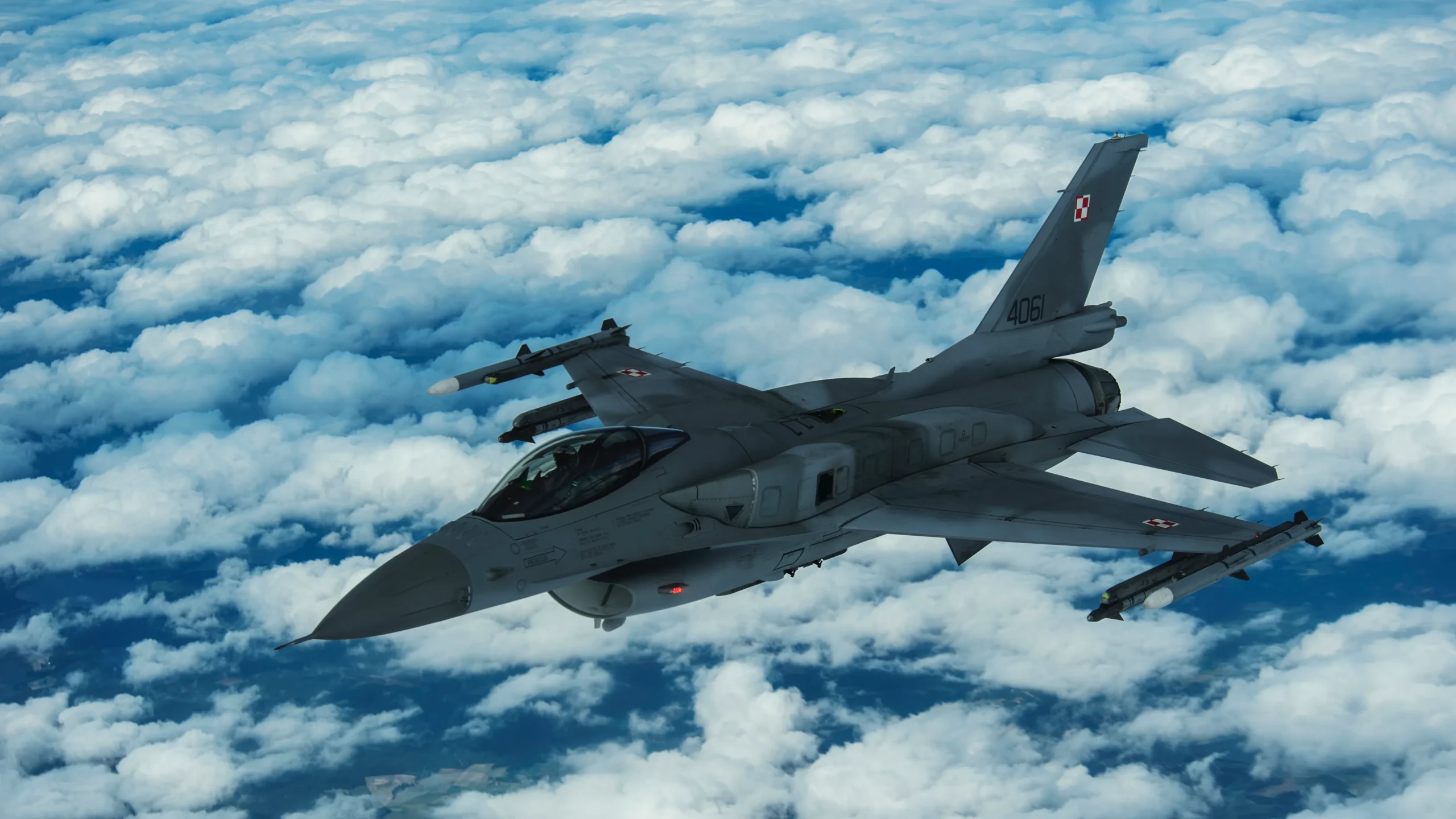
Polish News, Economy / Source: Republika / Photo: A Polish Air Force F-16C Fighting Falcon during a military exercise, 2017 by Commander, U.S. Naval Forces Europe-Africa/U.S. 6th Fleet – 170614-F-RH756-417