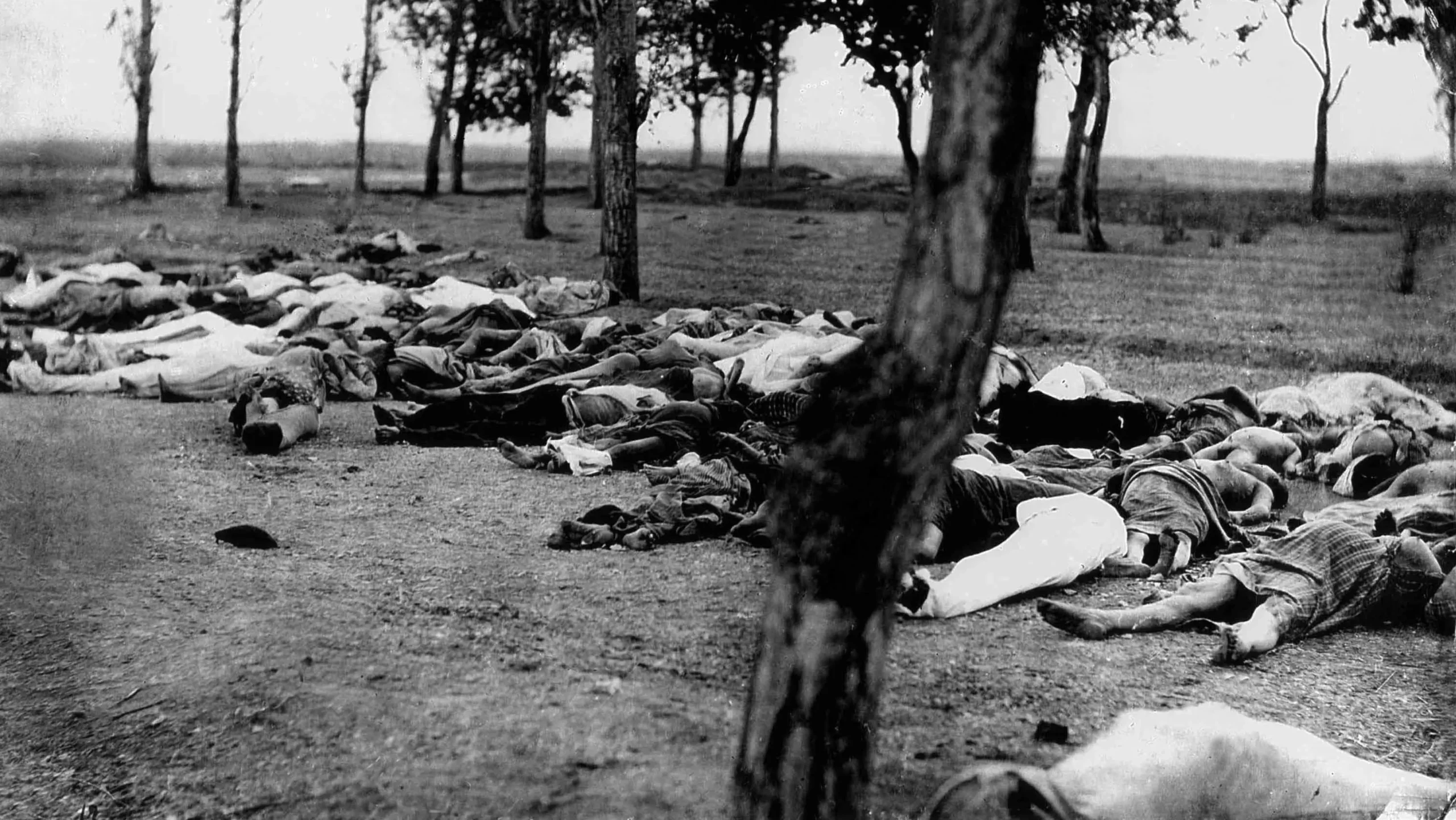
YEREVAN: On April 24, 2025, Armenians around the world commemorate the 110th anniversary of the genocide that claimed the lives of over 1.5 million of their compatriots. In Yerevan, the country’s top officials paid tribute to the victims, while survivors’ testimonies remind the world of the enduring wounds of history.
Table of Contents
:The 110th Anniversary of the Armenian Genocide: Armenian Leaders Pay Tribute to the Victims
President of Armenia Vahagn Khachaturyan, Prime Minister Nikol Pashinyan, and Speaker of Parliament Alen Simonyan visited the Armenian Genocide Museum-Institute on April 23, 2025. They participated in the opening of a temporary exhibition titled “Documenting the Crime: Eyewitness Recorders of the Armenian Genocide,” commemorating the 110th anniversary of these tragic events. Earlier, they laid wreaths at the memorial complex in Tsitsernakaberd.
The exhibition presents around 70 eyewitness accounts—diaries, diplomatic reports, photos, and films—documenting the genocide from various international perspectives.
What Was the Armenian Genocide?
The Armenian Genocide refers to the systematic extermination of more than 1.5 million Armenians by the Young Turk government of the Ottoman Empire, beginning in 1915 during World War I.
Phases of the Armenian Genocide:
1. Arrests of intellectuals: On April 24, 1915, hundreds of Armenian intellectuals and community leaders were arrested in Constantinople and later executed.
2. Forced conscription and executions: Approximately 60,000 Armenian men were drafted into the Turkish army, disarmed, and killed.
3. Deportations and massacres: Women, children, and the elderly were deported to the Syrian desert, where many perished at the hands of Turkish soldiers, police, and Kurdish and Circassian militias.
4. Forced Islamization: Thousands of women and children were forcibly converted to Islam.
5. Denial of the crime: To this day, the Turkish government denies that a genocide occurred, despite overwhelming evidence and international recognition.
In 1948, the United Nations adopted the Convention on the Prevention and Punishment of the Crime of Genocide, defining genocide as an international crime and obligating signatories to prevent and punish such acts.
Testimony of Araksi Demirchyan: A Fight to Reclaim Her Legacy
90-year-old Araksi Demirchyan from Gyumri, a descendant of genocide survivors, hopes to reclaim her mother’s confiscated property, documented in a will. “Let the world know what we lost and how long we’ve been fighting for justice,” she told Armenpress.
Her family originated from Kharberd in the Ottoman Empire. Her grandmother, Martha Khachikyan, after losing her husband during the genocide, fled to Aleppo with her daughters. In 1929, Martha officially appealed to Aleppo’s authorities to restore her rights to their confiscated properties, but the case remained unresolved.
In 1946, the Demirchyan family repatriated to Armenia. “I was nine when we came here. We were happy—we knew this was our home,” Araksi recalled. The translated will is kept at the Armenian Genocide Museum-Institute. It shows their estate in Kharberd was worth 18,000 Turkish liras in 1929.
Araksi contacted numerous organizations in Armenia and abroad and even visited Turkey to consult lawyers, but no progress was made. “I made a vow to God—I won’t die until I reclaim those assets. Once I do, I’ll donate everything to orphanages and care centers for the elderly. It’s my duty,” she added.
International Recognition and Controversies
The Armenian Genocide has been officially recognized by many countries and international organizations, including France, Russia, the United Kingdom, Germany, Italy, Belgium, the Netherlands, Sweden, Greece, Lithuania, the Vatican, the European Parliament, and the United Nations.
In North America, both the United States (officially in 2021 by President Joe Biden) and Canada recognize the genocide, along with several Latin American countries such as Argentina, Brazil, and Chile.
Despite these recognitions, Turkey continues to deny any wrongdoing, claiming Armenian deaths were war casualties and not part of a deliberate extermination. The Turkish government actively lobbies against international recognition, using propaganda and diplomatic pressure.
Poland Remembers: Sejm Condemns the Armenian Genocide
Poland was one of the first Central and Eastern European countries to officially recognize the Armenian Genocide. In 2005, the Sejm of the Republic of Poland unanimously adopted a resolution condemning the mass murders committed against Armenians by the Ottoman Empire.
The resolution states:
“The Sejm of the Republic of Poland pays tribute to the victims of the first genocide of the 20th century—the Armenian Genocide committed by the Ottoman Empire between 1915–1923. We recall this crime to honor the memory of the victims and to prevent such tragedies in the future.”
Conclusion: Memory as a Commitment
The commemoration of the 110th anniversary of the Armenian Genocide is not just a moment of remembrance. It’s a call for justice and a reaffirmation of the truth. Stories like Araksi Demirchyan’s remind us of the personal and collective losses endured and the moral obligation to acknowledge history, seek justice, and uphold human dignity.
Keywords (SEO): Armenian Genocide, 110th anniversary, Armenpress, Araksi Demirchyan, President of Armenia, Sejm of Poland, Turkey, historical memory, heritage, Kharberd, Tsitsernakaberd, Armenia, Sejm resolution, survivor testimony, Armenian Genocide Museum.
CER >> Culture & History >> LKN >> Source: Wikipedia, Armenpress, Agencja Informacyjna >> Photo: Armenian Genocyde Wikipedia >> 24.05.2025