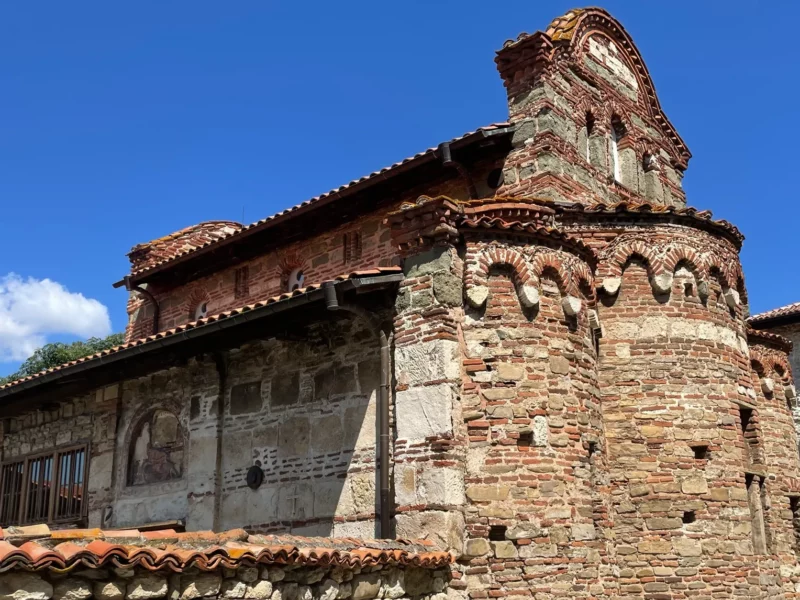
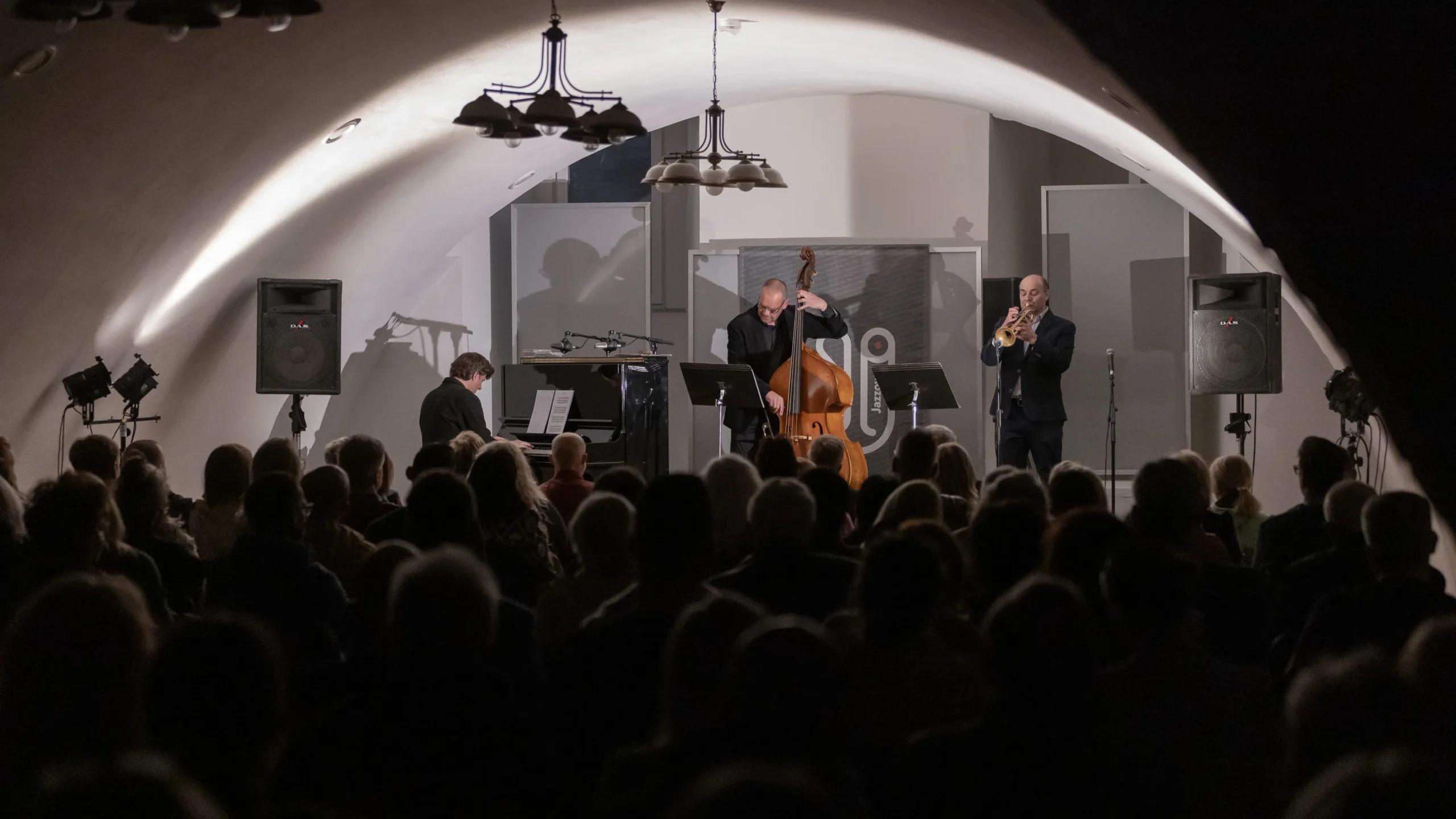
Świdnica. On 29 April 2026, on the eve of UNESCO’s International Jazz Day, the concert Felice Nowo took place in Piwnica Świdnicka. It was the first jazz event held in the newly opened underground space of the former Jesuit College in Świdnica. The seventeenth-century college building, erected by the Jesuits between 1664 and 1667, stands next to the Cathedral of St Stanislaus and St Wenceslaus. Its ongoing revitalisation is currently being carried out by the Diocese of Świdnica.
Table of Contents
Jazz Meets Jesuit Heritage
The event carried a special symbolic weight. For centuries, Jesuit colleges played a formative role in the cultural and intellectual life of Central Europe. They were not only centres of religious education, but also places where rhetoric, theatre, music and the humanities shaped generations of students and contributed to the region’s distinctive spiritual and artistic landscape. Bringing jazz — one of the most expressive languages of modern musical freedom — into the cellars of a former Jesuit institution created a powerful meeting point between memory, faith, education and contemporary creativity.
Feliks Nowowiejski Reimagined
In the historic interiors, audiences heard excerpts from Feliks Nowowiejski’s oratorios Quo vadis, The Finding of the Holy Cross and Missa pro pace, as well as the composer’s vocal, organ and piano works arranged as jazz variations. The underground spaces of the former Jesuit College became a place where the spiritual atmosphere of history met the modern language of musical improvisation.
A New Stage for Świdnica’s Historic Cellars
The concert was held as part of this year’s edition of the Świdnica Jazz Nights. The inclusion of Piwnica Świdnicka in the festival programme is highly symbolic: the cellars, revitalised by the Diocese of Świdnica, are gaining recognition as an acoustically distinctive concert venue and as a new, important point on the cultural map of the city and the region.
A Central European Language of Freedom
Jazz itself has a particular resonance in Central Europe. In the twentieth century, it often functioned not merely as entertainment, but also as a sign of openness, individuality and artistic independence. In cities from Prague and Kraków to Budapest, Wrocław and Warsaw, jazz became a language through which musicians could enter into dialogue with both Western modernity and their own local traditions. In this context, the Świdnica concert was more than a musical event: it was a gesture of cultural continuity, linking sacred heritage, regional history and the improvisational freedom so deeply associated with jazz.
The Meaning of Felice Nowo
The title of the project, Felice Nowo, refers to the person and work of Feliks Nowowiejski. “Felice” was the nickname given to the young composer by his master, Max Bruch, during his studies in Berlin. The creators of the concert reinterpret it today as a sign of joy flowing from creative freedom, improvisation and musical dialogue.
Kraków Musicians Behind the Project
The project was created by artists and educators associated with Kraków’s musical community: Professor Tomasz Kudyk, trumpeter, composer, arranger and producer, a graduate of the Academy of Music in Kraków; Dr Maciej Adamczak, jazz double bassist and lecturer at the Krzysztof Penderecki Academy of Music in Kraków; and Dr Mateusz Pałka, jazz pianist, composer and graduate of the Kraków Academy of Music.
A Revitalised Venue on the Cultural Map
Piwnica Świdnicka is located in the underground spaces of the former Jesuit College, in the immediate vicinity of Świdnica Cathedral. Recently, it has hosted, among other events, meetings of the tourist guide community, interdisciplinary conferences of the Sudeten Forum of Initiatives, the Caritas Gala of the Diocese of Świdnica, and an early music concert by the ensemble Rocal Fuza.
Partners and Organisers
The April concert was co-organised by the Świdnica Cultural Centre and the Arte Agency. The event partners included the local governments of the City of Świdnica and Świdnica County, the ARCHE Tourism Promotion Centre, the Logos Media Group, and the companies Greenbrier Poland and Galess.
Central Europe Report, Culture & History / Source: GML / Photo: Mariusz Buczma / 30.04.2026